
Yes. A tented camp in Tanzania is safe when you stay at an established camp and follow a few simple rules. You will probably hear lions, hyenas or hippos at night, and in some camps animals walk through after dark. That is part of the experience, and good camps are designed and run around it.
This guide explains how a tented camp works at night, what the sounds are, which rules keep you safe, and how to choose a camp that suits you. If you are still deciding where to go, start with our guide to planning your first safari in Tanzania. If you want to know what the days feel like, read what to expect on a safari in Tanzania.
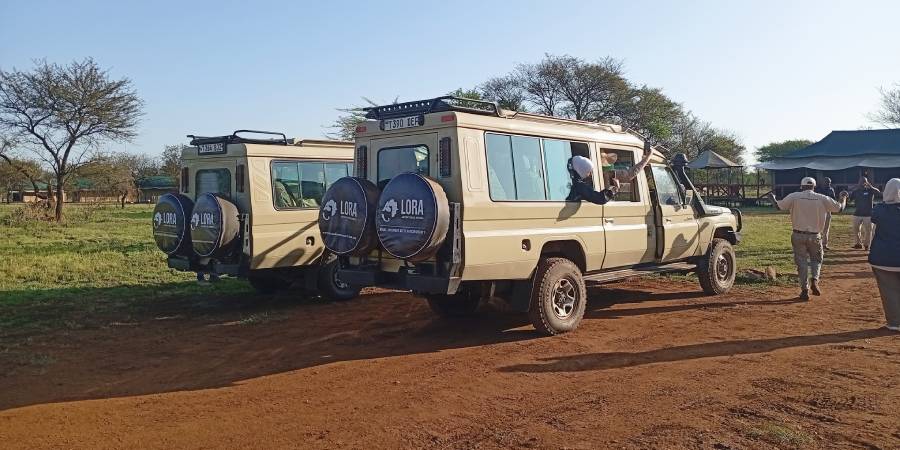
Picture a hotel room with canvas walls. A permanent tented camp has a real bed with proper bedding, a solid floor, a zip door and windows with mesh screens. In most mid range and luxury camps there is also a bathroom attached to the tent, with a flush toilet and a hot shower. Many tents sit on a raised platform with a veranda. Power usually comes from solar panels or a generator, so lights and charging points work, but some camps switch the generator off at night, so keep a torch beside the bed.
People often mix up the different styles, so here is how they compare:
We explain how to choose between them, and when to stay inside or outside a park, in our guide to planning a first safari in Tanzania
In many unfenced camps in Tarangire, Lake Manyara and the Serengeti, yes. Camps are built in the animals’ home, often without a fence, and wildlife moves through at night. Animals you might see or hear near camp include:
Lions and leopards are around too, but they rarely come into camp. Animals tend to walk around a tent the way they would walk around a boulder. They do not see it as food, and they are not looking for you. The real risk is surprising an animal on a dark path, which is exactly why the escort system exists.
Most nights are mostly insects, frogs, birds and wind. When something louder happens, this is usually what it is:
A sound is not a sign of danger. Animals are loud because that is how they talk to each other, often across long distances. It is common for first time Safari travelers to feel worried or nervous when they hear such sounds. Some have told us that the sounds kept them awake the first night. But they soon got used to them, and on the second day, they slept normally.
Good camps use a system, not luck.
In most mid range and luxury tents, the toilet is inside the tent, so you never need to go outside. If your camp has toilets in a separate block, call your escort and wait. Do not go alone, even for a short walk. Ask the camp staff at check in how the night system works, so you know it before it gets dark.
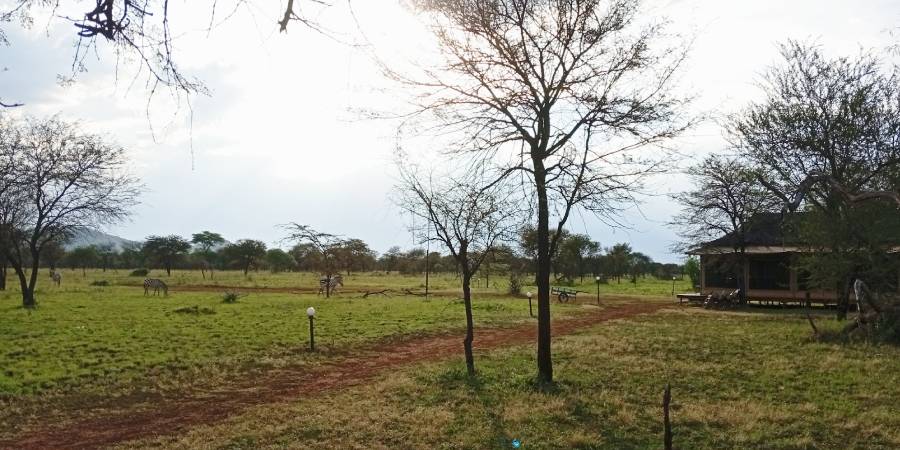
All established camps work to the same basic standard, but the setting changes the experience.
In the Serengeti, you sleep inside the park, which is why a camp’s escort system matters more than a fence. Around Tarangire, Lake Manyara and Ngorongoro Crater, you can choose between staying inside or outside, and staying outside is the calmer option.
Yes, with the right camp. Some camps set a minimum age for children, and some require children to stay with an adult at all times. Tell your operator the ages of your children and any worries before you book, so the right camp is chosen. If you are nervous, ask for:
If you are an older traveler or have limited mobility, ask about steps, path surfaces and the distance from your tent to the dining area.
If you are booking a lodge yourself, check the answers with your operator first. The right camp depends on your route as well as your comfort. We explain why in our planning guide.
Yes. Established Serengeti camps have escorts, trained staff and a clear night routine. Follow the rules and you will be fine.
Lions rarely enter camps. You may hear them from a distance. If an animal does come close, staff know what to do and you stay in your tent.
Tents have solid floors and zipped doors, and large animals tend to walk around them. Baboons and monkeys can open or enter an unzipped tent, so keep it closed and keep food out.
Some are and many are not. Ask your operator, and choose a fenced or solid walled lodge if that matters to you.
Stay inside, stay quiet, and do not unzip the door to look. If you need help, use the camp’s call system.
Tell us what worries you most, and we will choose an accommodation type that suits you. Start your Tanzania safari plan, or see our 6 day classic Tanzania safari and other classic safari packages.
+255 767 626 058
info@loraadventuresafrica.com
Arusha, Tanzania

© 2026 Lora Adventures Africa. All Rights Reserved.